Category: Sleep Science
-
How to stay awake without caffeine
In a world where fatigue is a common struggle, reaching for that cup of coffee might seem like the easiest —or only— solution. However, constantly relying on caffeine, especially in the form of carbonated beverages, is definitely not the healthiest way to address chronic fatigue. Addressing the underlying causes of fatigue is crucial for sustainable…
-
An Expert’s Guide to Conquering Nighttime Anxiety
Here’s one for the nights where you can’t turn your brain off: in this guide, we’ll explore the reasons behind nighttime anxiety and actionable tips to help you establish a calming bedtime routine. Why Nighttime Anxiety Strikes Even after a seemingly stress-free day, our brains tend to bring unresolved worries to the forefront when we…
-

Hitting Snooze: A Wake-Up Call to Recognize Sleep’s Vital Role in Therapy
By our very own Jeff Kashou, LMFT! Originally printed in the Nov/Dec issue of The Therapist, Magazine of the California Association of Marriage and Family Therapists. Since one-third of a person’s life is meant for sleep, are we as mental health providers treating it with the respect that it deserves in our practice with clients?…
-

Meet our clinical product director on Sleep is a Skill Podcast!
Dr. Victoria Bangieva, our incredible clinical product director, appears on Sleep is a Skill Podcast to talk about sleep health—and Sleepbot. She’s interviewed by Mollie Eastman, the Founder of Sleep Is a Skill and passionate insomnia survivor who helps people optimize their sleep through their data and her own hard-earned wisdom. How it all began…
-
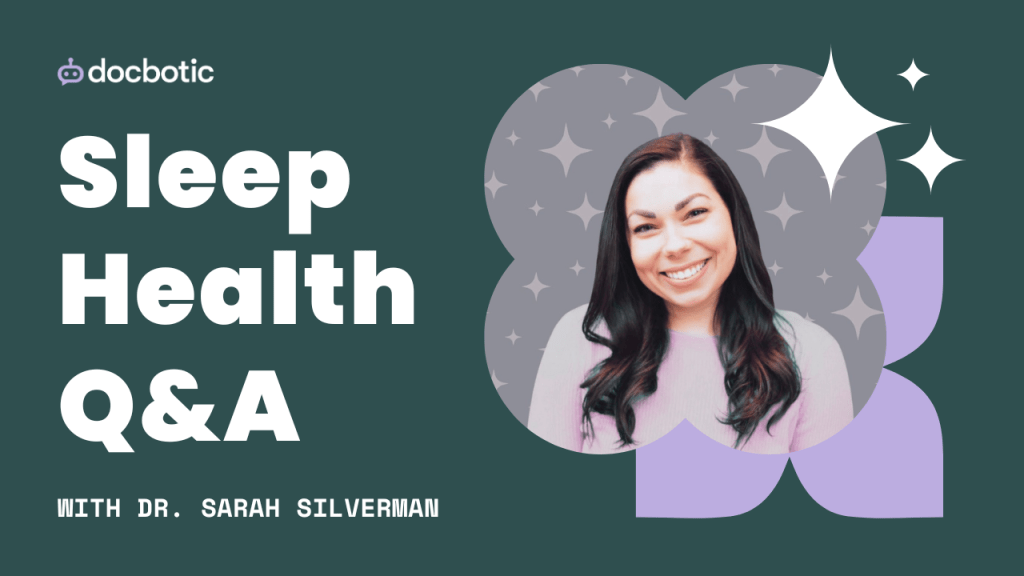
Sleep expert Dr. Silverman answers your questions!
Our very own Dasha Geller recently sat down with Dr. Sarah Silverman, a holistic sleep expert and friend of docbotic, to answer your sleep questions. We love Dr. Silverman for her focus in long-term sleep health, her advocacy for the oft-ignored issue of women’s sleep health, and for generally being an amazing human being! In…
-

Which sleep chronotype are you?
What’s a sleep chronotype? You know the phrase “early bird?” That describes one sleep chronotype. Your sleep chronotype is your natural instinct to sleep and be awake. It can influence appetite, exercise, energy, when your body releases melatonin, and when you feel most productive. It’s like an early bird or a night owl, but with…
-
All About Melatonin
Ever taken melatonin? In recent years, it’s been all the rage. Touted as a “natural” and “drug-free” way to fall asleep and better your overall health, melatonin supplements are available cheaply and without a prescription. But is taking them a good idea? What is melatonin? Let’s get into some science for a moment. In our…
-
I spy a CBT-I
We at Docbotic say that Sleepbot is based on CBT-I. But what’s CBT-I? Let’s start with the basics. What’s CBT? CBT stands for cognitive behavioral therapy. It’s a type of structured, time-limited talk therapy with a licensed professional, like a social worker or psychologist, that can be very helpful for certain conditions like anxiety or…
-

PTSD and Sleep
In honor of Post Traumatic Stress Disorder (PTSD) Awareness Day, it’s time to connect over how experiences of traumatic stress and PTSD impact sleep. How does PTSD impact sleep? Since PTSD is a state of persistent excessive arousal after experiencing or witnessing a traumatic event, folks that live with PTSD can struggle with sleep. The…
-
I’m neurodivergent. Why can’t I sleep?
As a neurodivergent person, sleep can be tough. Causes for poor sleep in neurodivergent people There are many different reasons that it can be difficult to sleep as someone who has a neurodivergent brain, and there’s still research being conducted on the causes of poor sleep. Some causes may include co-occuring mental health diagnoses like…
 docbotic